

In order to help to solve many society’s problems, AI Technologies must be of high quality and they must be developed and used in a way they gain the trust of citizens

As a specialist in signal processing and machine learning, Emmanuel Jean is a researcher in the AI group of Multitel. His areas of interest are data analysis and deep learning. His current research focuses on the development of trustworthy Artificial Intelligence.

In VIADUCT, his work focuses on a new multimodal, adaptive and speech-centric human/machine interface in semi-autonomous cars. As the new advanced driver assistance systems (ADAS) are little used due to a lack of trust, a voice assistant has been developed to reassure the driver by providing the information necessary for its use. He also leads the working group on ‘Trusted artificial intelligence for critical systems’ of the ARIAC project.

The industrialization of AI is a crucial issue for industrial and economic competitiveness. However, AI-based systems are increasingly complex and appear as black boxes, which creates mistrust and hinders the adoption of its new technologies, particularly in sensitive sectors such as aeronautics, space or Medicine. In order to make AI-based systems trustworthy, it is necessary to develop tools and methods to industrialize certified AI based on the principles of explainability, robustness and compliance with ethics and legal and regulatory frameworks.

 

Towards an artificial intelligence that integrates

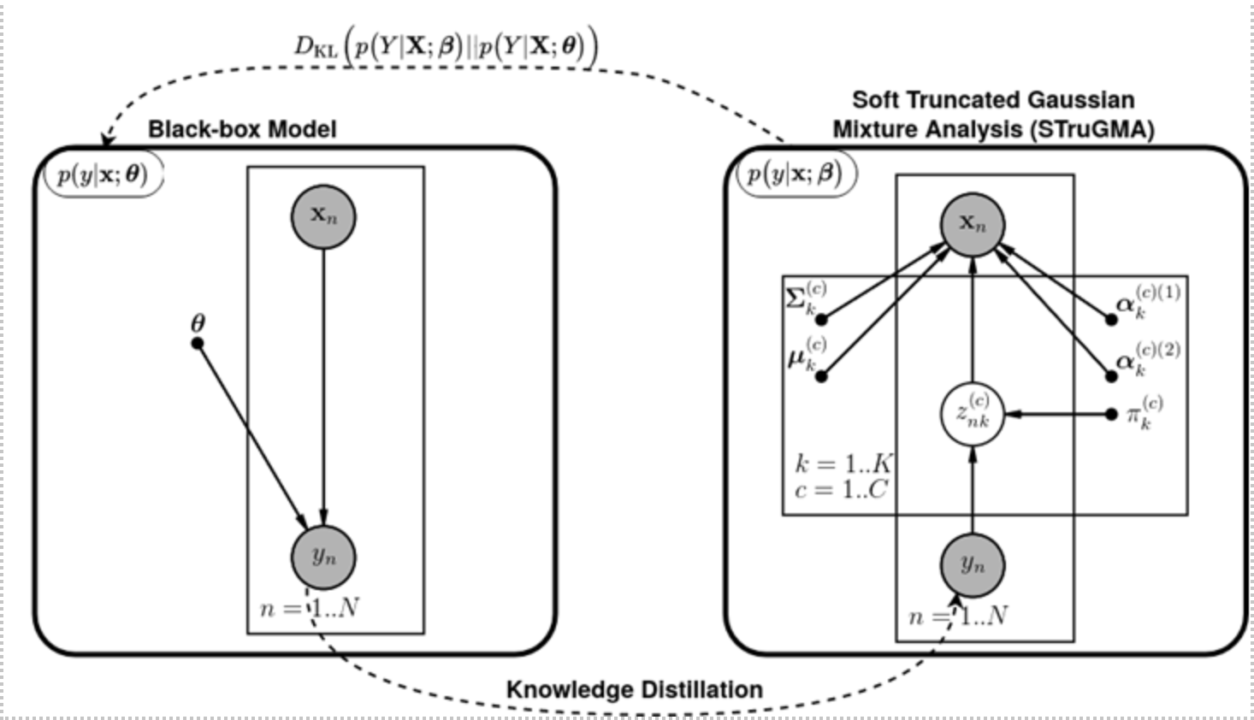
Geraldin Nanfack, a researcher at UNamur, has been working since December 2018 on his thesis as part of the EOS VeriLearn project. His research work aims to ensure that Machine Learning algorithms meet properties or certain constraints. For example, in one of his works [1] published at the ESANN’21 conference, he proposed a method to force decision tree algorithms to make fair decisions with respect to sensitive characteristics such as race or gender. In another work [2] published at UAI’21, he developed a method to force so-called “black-box” and differentiable models such as neural networks to be easily and globally explained by decision rules so that non-expert users of this artificial intelligence can understand how the decisions were made.

His work aims at having a more reliable Artificial Intelligence (AI), which can be endowed with faculties to provide faithful explanations of its behavior. This evolution of AI is valuable for several sensitive sectors such as health or banking that could use an AI predisposed to provide reliable explanations of its decisions while guaranteeing or maximizing fairness in its predictions.

[1] Nanfack, G., Delchevalerie, V., & Frénay, B. (2021). Boundary-Based Fairness Constraints in Decision Trees and Random Forests. In The 29th European Symposium on Artificial Neural Networks, Computational Intelligence and Machine Learning, https://proceedings.mlr.press/v161/nanfack21a.html.

[2] Nanfack, G., Temple, P., & Frénay, B. (2021, December). Global explanations with decision rules: a co-learning approach. In Uncertainty in Artificial Intelligence (pp. 589-599). PMLR, https://pure.unamur.be/ws/portalfiles/portal/61249591/ES2021_69.pdf.